
A smart site plan is as important as the floor plan
Below is a practical, Boise-focused checklist Cascade Custom Construction uses to help clients align design with the realities of the lot—before engineering and construction documents go too far.
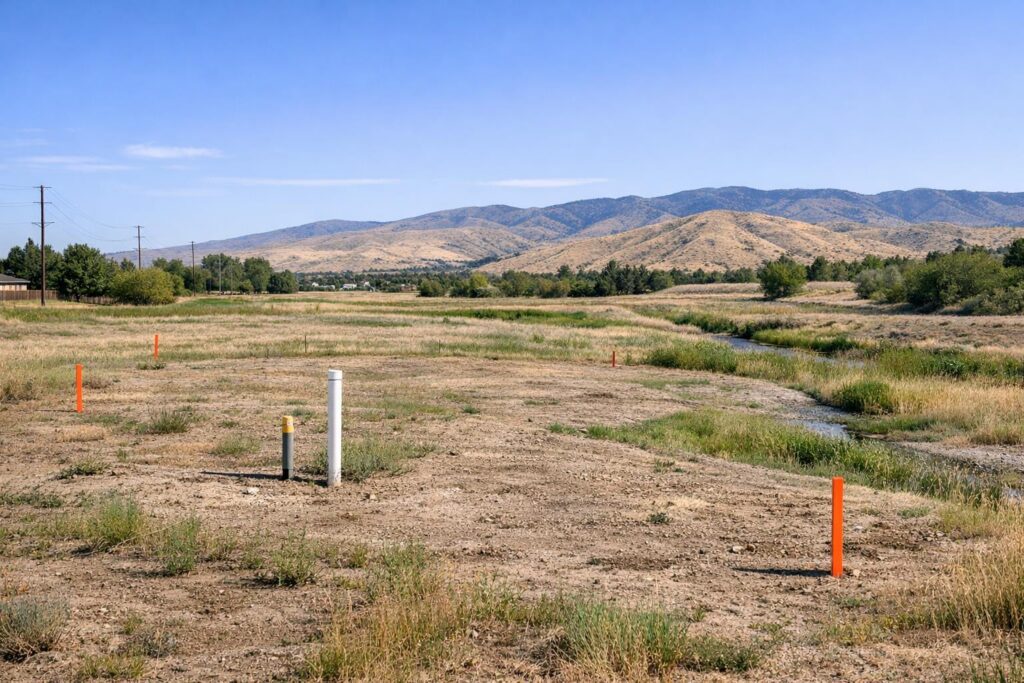
1) Floodplains: where “flat ground” can still be high risk
If you do find floodplain involvement, it doesn’t automatically end the project. It may mean the structure’s location, elevation strategy, access, and drainage plan need to be designed with extra care—and documented in a way your local reviewer can approve.
2) Fire exposure: siting and defensible space for Boise’s interface areas
Many wildfire preparedness programs emphasize the first 0–5 feet around the structure as especially critical—often called the immediate zone—because embers and radiant heat are most punishing close to the building. Guidance commonly recommends keeping that near-home zone as noncombustible as practical and moving combustibles (like firewood) farther away.
3) Easements: the “invisible lines” that dictate where you can build
Easements can also affect landscaping and grading. Some jurisdictions and utility corridors restrict trees or deep-rooted plantings within certain easements—something worth knowing if you’re planning privacy screening around a shop or barndominium.
Did you know? (Fast facts that impact pole barn siting)
Step-by-step: a practical siting checklist (Boise & Southern Idaho)
Step 1: Draw your “buildable envelope” first
Step 2: Confirm flood constraints and drainage flow
Step 3: Plan for fire access and defensible space
Step 4: Decide how the structure will live on the property
Step 5: Align the plan with your build type (wood framing matters)
Boise local angle: what makes siting tricky in the Treasure Valley
The best approach is to treat “siting” as a first-class phase of the project—right alongside design. When it’s done well, it protects your timeline and keeps your structure positioned for long-term durability.