
Moisture control starts under the concrete, not after the flooring fails
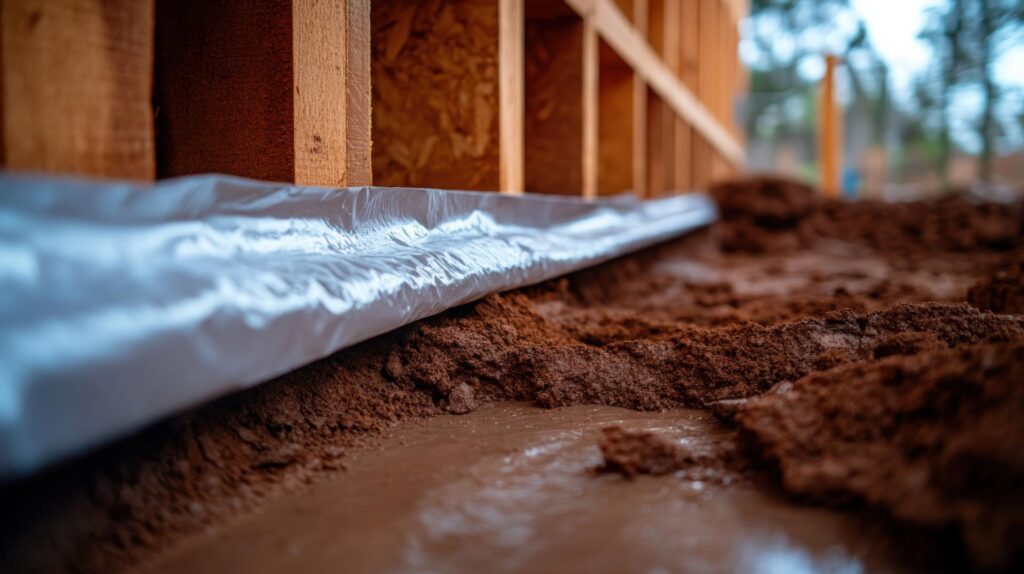
A barndominium slab in the Treasure Valley has a tough job. It needs to resist ground moisture, handle Idaho’s heating dominated climate, and stay compatible with modern interior finishes like LVP, tile, epoxy, and radiant heat. One of the most overlooked details is the vapor barrier (also called a vapor retarder) under the slab. Done right, it helps protect your flooring, framing, insulation, and indoor air quality for the long haul. Done poorly, it can create moisture headaches that are expensive to fix once the slab is poured.
Written for
Homeowners planning a custom barndominium or shop house in Boise and surrounding Southern Idaho communities who want fewer surprises during permitting, construction, and flooring installation.
Key takeaway
For most conditioned barndominiums in Idaho, a durable under-slab vapor retarder (commonly 10 mil or thicker, properly sealed) is a smart baseline. Thin plastic that gets punctured during the pour is where problems begin.
What an under-slab vapor barrier actually does
Concrete is not waterproof. Moisture vapor can move up from the soil, through the base material, and into the slab. In a finished barndominium, that moisture can show up as:
• Flooring adhesive failures or bubbles under resilient flooring
• Musty odors, elevated indoor humidity, and comfort issues
• Efflorescence (white mineral deposits) and surface discoloration
• Mold risk where moisture meets organic materials (baseboards, framing, carpet tack strips)
A correctly installed vapor retarder slows vapor diffusion, keeps the slab and interior finishes more stable, and supports long-term durability, especially when you plan to coat, seal, or cover the slab with sensitive flooring products.
Boise and Southern Idaho context: dry air, cold seasons, and indoor finishes
Boise is in IECC Climate Zone 5B, which is heating dominated and considered cool and dry. That “dry” label often leads homeowners to underestimate ground moisture and vapor movement. Even in a drier climate, soil moisture is still present, irrigation raises ground moisture around homes, and wintertime heating can create pressure and temperature differences that encourage vapor movement through assemblies.
If your barndominium will be conditioned space (heated and cooled), finished with modern flooring, or built for comfortable year-round living, under-slab moisture control becomes part of good building science, not a luxury upgrade.
10 mil vs 6 mil: why thickness and durability matter
Many homeowners have heard “6 mil plastic under the slab” because that was common for years. Code expectations and best practices have trended toward thicker, tougher vapor retarders for residential slabs, especially where the slab supports interior finishes. The reason is simple: thinner poly tears easily during foot traffic, rebar placement, plumbing work, and concrete placement. Once it is punctured repeatedly, it is no longer a reliable layer.
In the 2021 IRC, vapor retarders for slab-on-ground floors are commonly specified as a minimum 10 mil vapor retarder meeting ASTM E1745 Class A, with lapped seams. Many jurisdictions and inspectors now expect this level of performance for conditioned residential slabs.
Practical rule: if the slab will be inside the building envelope and you care about interior comfort and flooring performance, specify a product designed for slabs, not just thin plastic sheeting.
Installation details that make or break performance
A high-quality vapor retarder can still fail if it is installed casually. For a Boise barndominium slab, these are the details worth confirming before the pour:
Pre-pour checklist
• Base prep: Uniform, compacted base course helps reduce punctures and supports slab performance.
• Seam laps: Overlap seams (commonly 6 inches or more) and tape them with compatible tape for continuity.
• Penetrations: Seal around plumbing and conduit where possible. Unsealed penetrations are leak points for vapor and soil gases.
• Minimal holes: Protect the membrane during rebar/mesh placement and foot traffic. Patch accidental tears.
• Edges and transitions: Plan how the under-slab layer ties into stem walls, thickened edges, or interior grade beams.
If you are adding radiant floor heat, moisture control gets even more important because heat can drive moisture upward and temperature stability is key for interior finishes.
Quick comparison table: common under-slab approaches
| Approach | Best fit | Pros | Watch-outs |
|---|---|---|---|
| Thin poly (commonly called “6 mil”) | Some non-finished slabs or low-risk uses | Low cost, widely available | Tears easily; inconsistent performance under construction traffic |
| Purpose-built slab vapor retarder (commonly 10 mil+) | Conditioned barndominiums, finished shops, living areas | More durable; better continuity; supports modern flooring | Needs careful detailing at seams and penetrations |
| No under-slab vapor retarder | Rarely appropriate for residential conditioned space | None that help long-term interior finishes | Higher risk of moisture problems; limits flooring options later |
Did you know? Fast facts homeowners appreciate
Radon matters even when you feel “dry”
Idaho includes areas with elevated radon potential. A sealed under-slab layer and a thoughtful approach to penetrations can support a radon strategy, and testing is still recommended.
Flooring choices drive vapor barrier requirements
Many adhesives, coatings, and resilient floors have strict moisture limits. A strong under-slab vapor retarder helps keep more options on the table.
It is easier to prevent than to repair
Once a slab is poured, “adding a vapor barrier later” usually means surface-applied mitigation systems, specialty coatings, or flooring compromises.
Local Boise angle: irrigation, lot conditions, and outbuilding use cases
Across Boise, Meridian, Eagle, Nampa, and the broader Treasure Valley, many properties deal with seasonal irrigation, landscaped yards, and variable soils. Even when the air is dry, watering schedules and drainage patterns can keep the soil under and around a slab damp for long stretches. That is why slab moisture control is just as relevant for:
• Barndominium living space with finished floors
• Attached workshops and garages that you plan to heat later
• Hobby shops with epoxy coatings and tool storage sensitive to humidity
• Mudroom entries and laundry zones where moisture exposure is higher
A good builder will align the under-slab vapor retarder plan with the rest of the moisture strategy: site drainage, gutters, downspout discharge, base material selection, and how the slab edge is detailed.
How Cascade Custom Construction approaches barndominium slabs
At Cascade Custom Construction, the goal is to help homeowners across Southern Idaho get a premium, personalized structure that performs well for real life. For wood-frame barndominiums and custom shops, the under-slab vapor retarder plan is part of building with integrity because it is hidden work that protects the investment.
If you are in the design phase, it is the right time to talk through: how you will use the building (full-time living, part-time, or shop-first), what flooring you want, whether you plan radiant heat, and how you want the slab detailed at bathrooms, mechanical rooms, and transitions.
Helpful next step pages:
CTA: Get your slab specs reviewed before the pour
If you are planning a barndominium in Boise or anywhere in Southern Idaho, a quick plan review can help confirm your vapor retarder approach, seam and penetration details, and how it fits your flooring and comfort goals.
Note: Final requirements can vary by jurisdiction and project design. Always confirm with your local building department and your project’s stamped plans.
FAQ: Barndominium slab vapor barriers in Idaho
Do I need a vapor barrier under a barndominium slab in Boise?
If the slab is part of conditioned living space or will receive finished flooring, an under-slab vapor retarder is strongly recommended and is commonly expected by code pathways used for residential slabs. It is one of the cheapest moisture control layers you can install, and one of the hardest to retrofit.
Is 6 mil poly acceptable, or should I go thicker?
Many builders and inspectors now prefer a thicker, purpose-built slab vapor retarder because it holds up better during construction. Thin poly is more likely to get punctured, which reduces real-world performance even if it looked fine on day one.
Where does the vapor barrier go in the slab assembly?
Typically it is placed directly under the concrete slab and above the prepared base course (or prepared subgrade if no base course is used), with seams lapped and sealed. Your plans and local inspector will guide the final assembly.
What if I am building a shop now but might finish it later?
If there is a real chance you will heat, cool, or finish the space later, it is usually wise to build the slab like a future finished space now. Upgrading the under-slab vapor retarder is far easier than trying to solve moisture problems after you add flooring and drywall.
Does a vapor barrier help with radon?
It can help as one part of a broader radon strategy by reducing pathways through the slab, especially if seams and penetrations are sealed. Radon testing is still recommended for homes in Idaho regardless of zone.
Glossary
Vapor retarder (vapor barrier)
A membrane placed under a slab to slow moisture vapor diffusion from the ground into the concrete and interior space.
ASTM E1745
A standard that classifies vapor retarders used under concrete slabs based on strength and vapor resistance. “Class A” is a higher-performance category.
Efflorescence
White, chalky mineral deposits that can appear on concrete when moisture moves through it and carries salts to the surface.
Conditioned space
An area that is heated and or cooled as part of the home’s comfort system, which increases the importance of moisture control and air sealing.