
Pole Barn vs. Metal Building in Idaho: How to Choose the Right Structure for Boise-Area Weather, Permits, and Long-Term Use

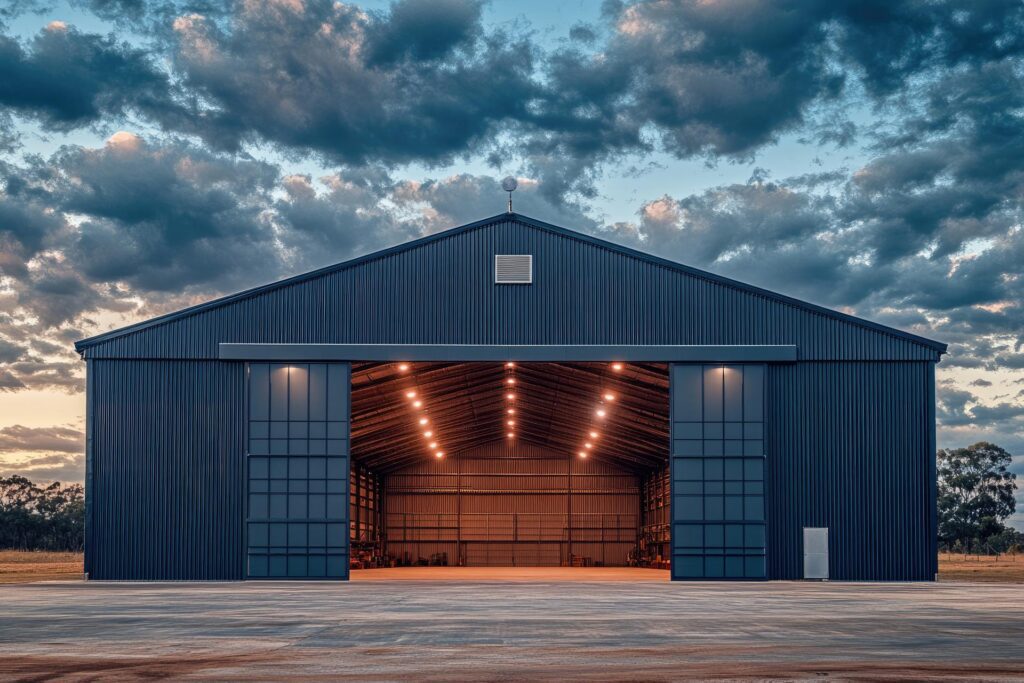
Large industrial hangar with open doors at dusk

A practical guide for Southern Idaho property owners who want a durable shop, barn, or barndominium-style home

In Boise and across Southern Idaho, “pole barn” and “metal building” get used interchangeably, but they are not the same thing. One is a construction method (post-frame or “pole barn”), while the other is typically a pre-engineered metal building system (often called a PEMB). The right choice depends on your site, intended use, permitting path, energy goals, and how you want the building to feel and function for decades.

At Cascade Custom Construction, we build high-quality wood-framed post-frame buildings and custom structures designed for Idaho conditions. This breakdown is meant to help you compare options clearly, ask better questions, and avoid costly surprises during design and construction.

First, define the terms (this clears up most confusion)

Pole barn / post-frame building: A structure that uses large, widely spaced wood posts (columns) as the primary vertical support, with engineered trusses and girts. The “post-frame” method is known for efficient material use, speed, and flexibility in layout. Many post-frame buildings are finished with metal siding and metal roofing, but the structure itself is typically wood. 

Metal building (PEMB): A structure where the primary frame is steel (rigid frames, I-beams, or similar), designed and fabricated as a system, then shipped to be erected on site. PEMBs are often associated with large clear spans and industrial applications.

In real life around Boise, you’ll also hear “metal building” used to describe anything with metal siding. That is why it helps to ask one clarifying question: “Is the frame wood post-frame, steel tubing, or pre-engineered rigid steel?”

What matters most in Boise and Southern Idaho

Idaho is not a one-number state for design loads. Snow, wind exposure, and elevation can change quickly as you move from Boise to nearby foothills, up toward mountain towns, or across the Magic Valley.

Boise-area snow load reminder
The City of Boise has published minimum snow load criteria (for example, a minimum uniform roof snow load is referenced in Boise code materials, and a Boise minimum ground snow load figure appears in Boise-area public bid documents). Always confirm your exact site requirements during permitting and engineering. 

Whether you choose post-frame or a steel-framed system, the safest approach is the same: use engineered plans that match your jurisdiction and your property’s actual conditions, especially for snow drift conditions, roof geometry, and exposure category.

Pole barn vs. metal building: the differences that actually affect your project

People often compare “cost” first, but for many Boise-area builds, the bigger swing factors are foundation approach, interior finishing plans, insulation strategy, and how much customization you want. Here are the practical differences most owners notice:

1) Layout and future flexibility
Post-frame structures are often chosen because they can be highly customizable for doors, lean-tos, overhangs, and mixed-use plans (shop plus storage plus future finished space). Many builders also find post-frame easier to adapt when the owner’s needs evolve. 

2) Clear-span needs and interior obstructions
If your priority is a very wide open interior with no interior posts, a pre-engineered metal building can be a strong fit because it is commonly designed for large clear spans. Post-frame can also be engineered for impressive spans, but the “best” solution depends on width, height, door sizes, and loading. 

3) Condensation and insulation planning
In Idaho’s four-season climate, condensation control matters. Both systems can be insulated well, but details matter: vapor control layers, proper ventilation paths, and choosing an insulation approach that matches your intended use (heated shop, RV bay, cold storage, or living space). Metal roof and wall assemblies also need a condensation plan from day one, not as an afterthought.

4) How “home-like” you want it to feel
If you are building a barn-home or barndominium-style residence, the framing method influences wall cavities, window and door detailing, sound control, and the overall finish experience. Many owners prefer post-frame or conventional wood framing when they want a warmer, more residential feel and straightforward finish work.

5) Permitting and engineered documentation
Regardless of system, most permitted builds require engineered plans and design criteria (snow, wind, seismic). Several Idaho jurisdictions publish “design criteria” guidance for applicants, and Idaho adopts state building code rules that local jurisdictions then enforce and amend. 

Quick comparison table (Idaho owner viewpoint)

Decision Factor
Post-Frame (Pole Barn)
Pre-Engineered Metal Building (PEMB)
Customization
High flexibility for mixed-use layouts, doors, and future changes 
Often more system-driven; changes can be more constrained 
Clear-span potential
Strong spans possible when engineered; depends on truss design
Common choice for large, open interiors 
Interior finishing
Can be very finish-friendly when planned as conditioned space
Can finish well too, but insulation and thermal bridging details need attention
Best fit uses
Shops, barns, RV storage, and barn-home style projects with custom details
Industrial, commercial, and very large clear-span buildings
Permitting
Typically permitted with engineered drawings and local criteria
Typically permitted with manufacturer engineering plus site-specific foundations
Note: “Better” depends on the building’s purpose, site, and performance goals. A well-designed, properly built system wins every time, regardless of material.

Boise local angle: questions worth asking before you commit

If you are building in the Boise area (and especially if you are outside city limits, where requirements can vary), these questions keep projects moving smoothly:

What are the design loads for my exact address?
Snow and wind criteria can differ by jurisdiction and site. Boise publishes minimums and amendments; other jurisdictions publish their own criteria documents. 
Is any portion a conditioned space (heated and cooled)?
If yes, plan insulation, air sealing, and condensation control as part of the design, not after framing is complete.
What is the long-term use case?
A hobby shop today often becomes a business workspace later. RV storage can become a gym or guest area. Framing and mechanical planning should anticipate that.
How do I want the building to look on my property?
Siding profiles, rooflines, overhangs, window packages, and entry details change the finished feel dramatically, especially for a barn-home look.
If you are comparing multiple bids, make sure each builder is quoting the same scope: engineering, site work assumptions, slab and footings, insulation level, door packages, and interior finish readiness. That is where apples-to-apples comparisons usually break down.

Talk through your plan with a Boise-area builder who specializes in custom post-frame structures

If you want a custom pole barn, shop, or barn-home style structure designed for Southern Idaho conditions, we can help you clarify layout, permitting steps, and build strategy. No pressure, just experienced guidance and clear next steps.

FAQ: Pole barns and metal buildings in Idaho

Is a “metal building” always steel-framed?
Not always. Many post-frame buildings are finished with metal siding and a metal roof, so people call them “metal buildings.” The key difference is the primary frame: wood post-frame vs a pre-engineered steel frame. 
Which is better for a shop in Boise, a pole barn or a PEMB?
It depends on your priorities. If you want a highly customized layout and a structure that can evolve over time, post-frame is often a great fit. If you need very large clear spans and a more industrial system approach, a PEMB can be a strong option. Either way, engineering and weather-appropriate detailing matter most.
Do Boise-area jurisdictions require engineered plans?
Many permitted buildings require engineered drawings and design criteria compliance, especially when snow loads, wind loads, or occupancy and use trigger specific code requirements. Always confirm with your local building department and design professionals.
Can a pole barn be insulated and finished like a home?
Yes, when it is designed from the start for a conditioned space. The right wall assembly, air sealing, vapor control, and ventilation plan make a big difference in comfort and moisture control.
What should I bring to a first consultation?
A rough site plan or address, your target building size, intended use (cold storage vs heated workspace vs living space), any must-have door sizes (RV height, trailer width), and inspiration photos for exterior style. If you already have a survey or septic and well info, that helps too.

Glossary (helpful terms for comparing bids)

Post-frame (pole barn)
A building method using large wood posts as the primary structure, with engineered trusses and framing members. 
PEMB (Pre-Engineered Metal Building)
A steel framing system designed and fabricated as an integrated kit, then assembled on site. 
Ground snow load vs. roof snow load
Ground snow load is a site-based design value; roof snow load reflects how snow is expected to accumulate on your roof shape and slope, including drift potential. Local amendments may set minimums. 
Condensation control
The set of design details that prevent moisture problems in metal-roof and metal-wall assemblies often involves air sealing, ventilation, and proper vapor control layers.
Scroll to Top