

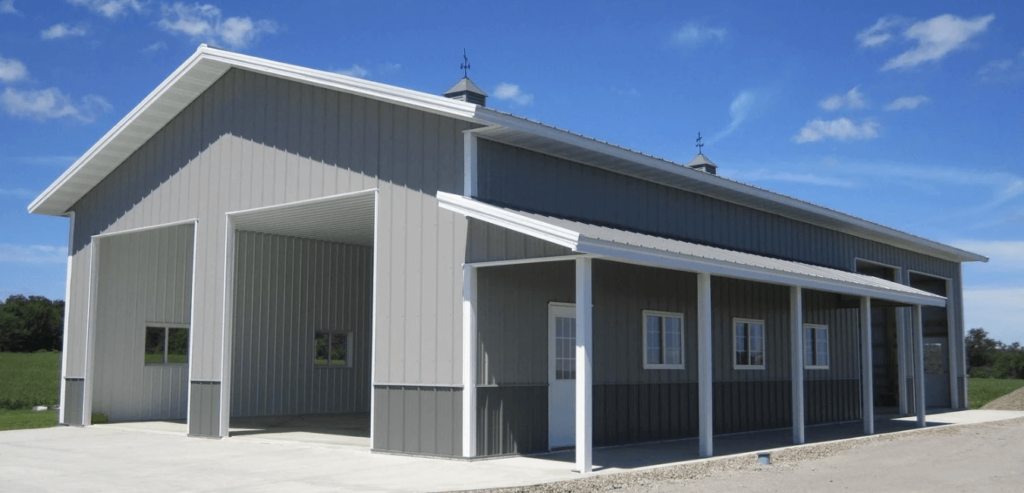
Building a barndominium in Payette County, Idaho, continues to attract landowners who want a flexible residential structure that combines living space with storage, workshop, or agricultural functionality. Cascade Custom Construction has worked with rural property owners throughout southwest Idaho and understands that successful barndominium projects depend on more than just design preferences. Zoning compliance, structural engineering, septic feasibility, and access approvals all determine whether a project is approved or delayed.
This guide explains how barndominium permitting works in unincorporated Payette County as of 2026. It outlines jurisdictional boundaries, zoning rules, engineering standards, and common issues that arise during the permitting process. This content applies only to unincorporated Payette County. Parcels located within city limits, including the City of Payette, are governed by municipal building and zoning departments and must follow city-specific regulations.
Understanding these distinctions early helps property owners avoid missteps that can result in redesigns, added costs, or denied permits.
Where Payette County Has Jurisdiction
In unincorporated areas of Payette County, building permits are issued by the Payette County Building Safety Department. This department works in coordination with Planning and Zoning, the Health Department for septic approvals, and Road, Bridge, or Highway Districts for access and driveway compliance.
According to Payette County Building Safety, all building permit applications must include an approved septic permit, even for structures that do not contain bathrooms. This requirement often surprises property owners planning accessory buildings or shop-house layouts. Review timelines begin only after a complete submittal is received, and the county notes that the minimum review period is approximately two weeks.
Planning and Zoning oversees land use compliance, subdivision regulations, and floodplain enforcement. The county’s floodplain ordinance applies to parcels near waterways, irrigation canals, and drainage corridors. Any development within these areas may require additional documentation or mitigation.
Zoning Context for Barndominiums
Payette County generally treats barndominiums as residential structures when used as dwellings. This means they must be allowed within the zoning district and comply with the same setbacks, access, and land-use standards as traditional homes.
Key zoning considerations include the parcel’s zoning designation, whether single-family residential use is permitted, and whether the property is subject to subdivision CC&Rs. While Payette County does not enforce private covenants, these restrictions remain legally binding and frequently limit metal siding, shop-style layouts, or mixed-use residential designs. Property owners evaluating land suitability should reference a detailed barndominium zoning and land suitability checklist for Idaho before committing to a site.
Floodplain overlays and irrigation easements are also common throughout the county. Properties adjacent to irrigation ditches or canals may require approval from irrigation districts, and building setbacks from these features are strictly enforced. Road access and driveway requirements must meet county or highway district standards, particularly for parcels located along state highways or major county roads.
The Planning and Zoning Department enforces these regulations and confirms zoning compliance before a building permit can be issued.
Lot Size and Land Requirements: Lot size requirements in Payette County vary by zoning district. There is no universal minimum lot size that automatically qualifies a parcel for a barndominium. Instead, feasibility depends on physical site conditions and regulatory constraints.
Soil suitability is one of the most important factors. Septic systems must be designed for site-specific soil conditions, slope, and groundwater depth. In addition to a primary drain field, Payette County requires sufficient space for a designated replacement area. Without this space, septic approval may be denied regardless of lot size.
Driveway and access feasibility must also be demonstrated. A site plan submitted with the building permit application must clearly show driveway location, width, and connection to a public or private road. Utility availability further affects feasibility. Power, water, gas, and fiber availability vary significantly across the county, and extension costs increase quickly on rural parcels.
For properties adjacent to irrigation infrastructure, approvals from irrigation districts may be required before permits are issued. The county’s building permit checklist requires a detailed site plan showing septic systems, wells if applicable, easements, and access points.
Structural Design Criteria in Payette County
Payette County publishes specific structural design criteria that all residential buildings must meet. Barndominiums must be engineered to meet or exceed these requirements.
Current published criteria include a Seismic Design Category of C, wind load requirements of 115 miles per hour, and a ground snow load of 30 pounds per square foot. Frost depth is established at 24 inches. These values are enforced regardless of whether the structure is conventionally framed, post-frame, or steel-framed.
All barndominiums must incorporate these loads into their foundation, framing, roof, and connection details. Engineering must be completed by a licensed professional and reflected in the submitted plan sets. Designs that fail to account for local load requirements are typically rejected during plan review.
Post-Frame and Steel Barndominium Requirements
Payette County allows post-frame and steel barndominium construction, but only when full structural engineering is provided. The Building Safety Department requires engineered plans for all residential structures, including foundations, framing systems, roof trusses, and connections. Property owners considering this method should understand what post-frame construction is and how it applies to residential permitting.
Non-engineered building kits frequently fail to meet county requirements because they are not designed for Payette County’s seismic, wind, or snow loads. Plans must include structural calculations and an engineer’s stamp. In practice, projects that rely on locally engineered designs experience fewer delays and smoother plan review.
Codes Used by Payette County
Payette County has adopted the 2018 International Building Code and the 2018 International Residential Code, along with Idaho state amendments. The county also enforces the International Energy Conservation Code, the International Fuel and Gas Code, and applicable Fire Code provisions.
These codes govern everything from insulation and energy efficiency to mechanical systems and life safety. Compliance is verified during plan review and confirmed through required inspections. Cascade Custom Construction ensures that all projects meet or exceed these adopted codes and local amendments across Payette County and surrounding Idaho service areas.
Permitting Process in Payette County
Pre-Submission Zoning and Land Use Review
Property owners should first verify zoning, permitted uses, setbacks, floodplain overlays, and access requirements.
Building Plan Submission
The building permit application must include a site plan showing property boundaries, proposed structures, septic systems, wells if applicable, and driveways. Structural plans, engineered trusses, and foundation details are required, along with a septic permit or application.
Plan Review
The Building Safety Office reviews structural plans, Planning and Zoning verifies zoning compliance, and the Health Department reviews septic documentation. The county states that the minimum review period is two weeks once a complete submittal is received.
Permit Issuance
After approvals and payment of fees, the building permit is issued.
Inspections
Typical inspections include footing or foundation, framing, mechanical, plumbing, electrical, and final inspection. A certificate of occupancy is required before the structure may be occupied.
Permit Fees
Permit fees in Payette County are based on project valuation and adopted fee tables. The Board of County Commissioners establishes these fees by resolution. Costs vary depending on project size and complexity, making early estimates an important part of budgeting. Reviewing a realistic barndominium cost breakdown in Idaho helps property owners plan appropriately.
Septic Systems, Wells, and Utilities
All septic systems must be permitted and approved prior to building permit issuance. Soil conditions, slope, and available space determine feasibility. Well depth and cost vary widely depending on location and geology. Utility connection costs depend on distance from existing infrastructure and terrain challenges. Payette County requires a septic permit even for accessory buildings without bathrooms, which is a common oversight for property owners.
Common Payette County Red Flags
Projects are frequently delayed or denied due to parcels located within city limits, restrictive CC&Rs, floodplain conflicts, proximity to irrigation ditches without mitigation, unsuitable soils for septic systems, access challenges requiring highway district approval, or reliance on non-engineered building kits.
Identifying these issues early prevents costly revisions and extended timelines.
Why Local Experience Matters
Cascade Custom Construction approaches Payette County barndominium projects with a focus on feasibility, compliance, and realistic budgeting. Understanding how county reviewers interpret codes, how irrigation districts affect build sites, and how structural loads influence design allows projects to move forward efficiently. Working with experienced barndominium builders in Idaho significantly reduces permitting risk.
Frequently Asked Questions
Are barndominiums allowed in Payette County?
Yes, barndominiums are allowed in unincorporated Payette County when zoning permits residential use and all building and health requirements are met.
Do I need a septic permit for a shop or accessory building?
Yes. Payette County requires a septic permit for all building permits, even when no bathroom is included.
Can I use a pre-engineered metal building kit?
Only if it is fully engineered to meet Payette County’s local load requirements and stamped by a licensed engineer.
How long does the permitting process take?
Once a complete application is submitted, review typically takes a minimum of two weeks, though timelines vary.
Does Payette County enforce CC&Rs?
No, but CC&Rs are legally binding and must be followed even if the county does not enforce them.
Building a barndominium in unincorporated Payette County is achievable with the right preparation and professional guidance. Understanding zoning rules, engineering standards, septic requirements, and access constraints early reduces risk and prevents delays. Property owners who take a proactive approach to feasibility and compliance are far more likely to enjoy a smooth construction process.
If you are evaluating land or planning a barndominium in Payette County, working with a builder who understands local codes, review standards, and rural infrastructure requirements can help you move forward with clarity and confidence.