
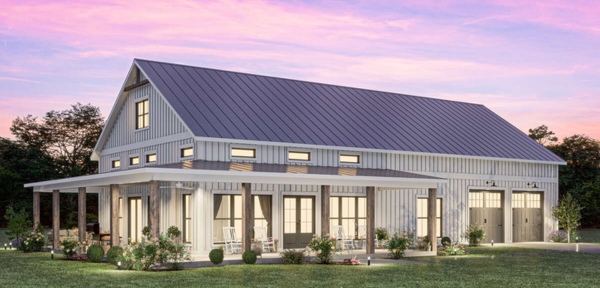
Owyhee County, Idaho, continues to attract landowners seeking wide-open space, agricultural flexibility, and fewer density constraints than neighboring counties. Custom Barndominiums, shop-houses, and post-frame residences align well with this rural environment, but successful construction still depends on careful planning and regulatory compliance. Cascade Custom Construction has worked with rural Idaho property owners who underestimate the complexity of permitting in large counties like Owyhee, where zoning, access, utilities, and engineering standards vary significantly by location.
This guide reflects permitting conditions and enforcement practices expected in 2026 for unincorporated Owyhee County. It explains how barndominiums are reviewed, what departments are involved, and which issues most often delay or prevent approval. Properties located within city limits follow municipal permitting procedures and are not governed by county building review.
Where Owyhee County Has Jurisdiction
In unincorporated areas, building permits are issued by the Owyhee County Building Department. The department coordinates reviews with Community Development, Planning and Zoning, and Health or Septic authorities depending on project scope and site conditions.
The Building Department reviews structural compliance with adopted building codes, while Planning and Zoning confirms land-use compliance, zoning classification, setbacks, and overlay restrictions. Health authorities evaluate septic feasibility and approval, which is required for most rural residential projects. Because departments review applications concurrently, incomplete submittals often lead to delays across multiple review tracks rather than a single correction cycle.
Understanding which authority reviews each portion of a project helps property owners prepare more complete applications and avoid piecemeal revisions.
Zoning Context for Barndominiums
Owyhee County treats barndominiums as residential structures when they are intended for full-time or seasonal living. Approval depends on whether the zoning district allows single-family residences or rural dwellings. Agricultural and rural residential zones often allow this use, but confirmation is required on a parcel-by-parcel basis.
Zoning review considers several factors beyond basic use. Private subdivision covenants and restrictions, commonly called CC&Rs, frequently limit metal siding, roof pitch, or shop-style layouts. While Owyhee County does not enforce CC&Rs, they remain legally binding and can override county approval.
Overlay zones also play a role. Floodplains, slope hazard areas, and irrigation easements may restrict building location or require mitigation. Irrigation canals and ditches are common throughout Owyhee County, and building near them often requires setback compliance or coordination with irrigation districts.
Access is another critical zoning component. Driveways must meet county or highway district standards, and parcels relying on historic rights-of-way, including RS-2477 routes, may require documentation to confirm legal access.
Lot Size and Land Feasibility
Owyhee County does not apply a universal minimum lot size for residential construction. Instead, feasibility depends on physical site conditions, infrastructure availability, and regulatory constraints. Large acreage alone does not guarantee buildability.
Septic feasibility is often the determining factor. Approval depends on soil penetration, slope, groundwater separation, and available space for both a primary drain field and a required replacement area. Parcels with shallow soils, heavy clay, or steep terrain frequently require alternative systems or may be deemed unsuitable.
Road access must be legally established and physically buildable. Long driveways, shared access easements, or connections to county roads may require additional approvals. Utility distance also matters. Power, water, gas, and fiber availability vary widely across Owyhee County, and extension costs can significantly affect project budgets.
Easements further complicate feasibility. Irrigation easements, canals, and rights-of-way can limit where structures may be placed, even on large parcels. These constraints should be identified before design work begins.
Structural Design Criteria in Owyhee County
Owyhee County enforces Idaho-adopted building codes along with county ordinances governing construction standards. Structural requirements address foundation depth, load paths, wind resistance, seismic design, snow loads, and frost depth.
While snow loads in Owyhee County are generally lower than in mountain regions, they still vary by elevation and exposure. Wind loads and seismic considerations must be incorporated into engineered plans. Foundations must meet frost depth requirements and account for soil conditions common in high-desert environments.
Barndominiums must be engineered as residential structures, not agricultural sheds. Structural calculations must demonstrate compliance with applicable loads and be prepared or reviewed by a licensed professional. Designs that rely on generic assumptions rather than site-specific conditions often fail review.
Post-Frame and Steel Barndominium Requirements
Post-frame and steel-frame construction is permitted in Owyhee County when full structural engineering is provided. The Building Department requires detailed plans showing foundations, framing systems, roof assemblies, and connection details.
Non-engineered kit buildings rarely meet county requirements without modification. Plans must include structural load calculations and professional stamping. Projects that submit incomplete or unverified plans typically face multiple correction cycles, extending timelines and increasing costs.
From a practical standpoint, barndominiums designed specifically for Owyhee County conditions move through review more efficiently than those adapted from out-of-area templates.
Codes Enforced by Owyhee County
Owyhee County enforces adopted versions of the International Residential Code and International Building Code, along with International Mechanical, Plumbing, and Energy Codes. These codes are supplemented by the County Code of Owyhee County, including Title 8-2B governing building and construction.
Code compliance is evaluated during plan review and verified through required inspections. Energy efficiency, mechanical systems, and life-safety provisions apply to barndominiums in the same manner as conventional homes.
Permitting Process Overview
Zoning and Land-Use Review: The process begins with verification of zoning classification, permitted use, setbacks, overlays, and access compliance.
Building Plan Submission: Applicants submit a building permit package including a detailed site plan, floor plans, structural engineering, and documentation for utilities and septic systems.
Plan Review: The Building Department reviews structural compliance, Community Planning evaluates zoning and overlays, and Health authorities review septic feasibility as required.
Permit Issuance: Once all reviews are approved and fees are paid, the building permit is issued.
Inspections: Typical inspections include footing or foundation, framing, mechanical, electrical, plumbing, and final inspection prior to occupancy approval.
Permit Fees: Permit fees in Owyhee County are based on project valuation and an established fee schedule published by the Building Department. Because valuation directly affects fees, accurate cost estimation early in the process is important. Cascade Custom Construction can obtain current fee estimates during project planning.
Septic Systems, Wells, and Utilities
Septic approval remains one of the most significant variables in Owyhee County. Soil conditions, slope, separation from water sources, and replacement area availability determine system design and approval. Well depth and cost vary widely depending on location and geology. Utility connections depend on distance from existing infrastructure and may require easements or trenching across difficult terrain.
Common Owyhee County Red Flags
Projects are frequently delayed due to parcels located within city limits, restrictive CC&Rs, floodplain or irrigation easements, access challenges requiring road authority approval, unsuitable soils for septic systems, and reliance on non-engineered building plans. Identifying these issues early prevents redesigns and scheduling setbacks.
Why Local Experience Matters
Cascade Custom Construction approaches Owyhee County barndominium projects with an emphasis on feasibility, code compliance, and transparency. Understanding how local reviewers interpret zoning rules, how irrigation infrastructure affects build sites, and how structural standards are applied allows projects to move forward with fewer surprises.
Frequently Asked Questions
Are barndominiums allowed in Owyhee County?
Yes, barndominiums are allowed in unincorporated Owyhee County when zoning permits residential use and all building and health requirements are met.
Do barndominiums require engineered plans?
Yes. Residential post-frame and steel structures must include engineered plans and structural calculations.
Can I build near an irrigation ditch or canal?
Possibly, but setbacks, easements, and irrigation district requirements must be satisfied.
How long does permitting typically take?
Timelines vary, but complete applications generally move faster than those requiring revisions or additional approvals. Learn more about the barndominium construction timeline.
Does Owyhee County enforce CC&Rs?
No, but CC&Rs are legally binding and must be followed regardless of county enforcement.
Building a barndominium in unincorporated Owyhee County in 2026 offers flexibility and space that many other regions no longer provide. However, success depends on understanding zoning rules, structural requirements, septic feasibility, and access limitations before construction begins. Property owners who take a proactive approach to planning and compliance are far more likely to experience a smooth permitting and construction process.
If you are considering land or preparing to build in Owyhee County, having guidance from a builder familiar with local regulations, infrastructure constraints, and review standards can provide clarity and confidence from the earliest stages through project completion.