

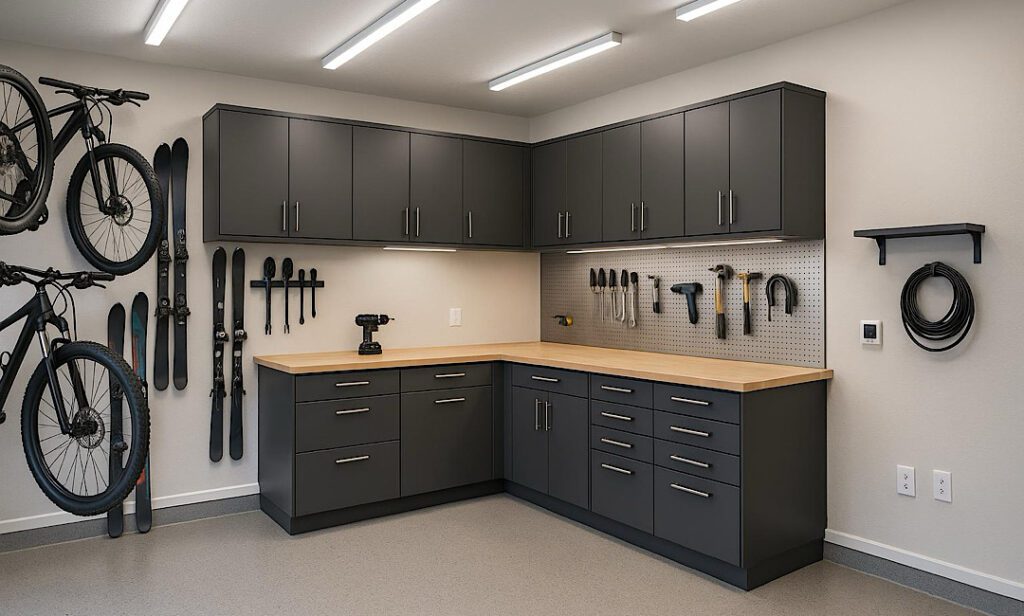
From Passion Project to High-Tech Haven: Engineering Your Perfect Workspace
The modern custom shop has evolved far beyond a simple space for storing tools or finishing weekend projects. It’s now a hub for creativity, innovation, and craftsmanship—a place where hobbies meet technology. Whether you’re a car enthusiast, woodworker, fabricator, or DIY tinkerer, designing a smart, tech-integrated custom shop enhances your efficiency, safety, and enjoyment.
A well-designed shop isn’t just about space; it’s about purpose-built functionality. Modern homeowners across Idaho are transforming their custom shops into high-performance workshops equipped with smart lighting, efficient climate control, integrated storage, and robust connectivity. Here’s how to take your workspace from functional to futuristic.
The Foundation of a Modern Workshop
Smart Electrical Planning: Powering Your Potential
Power is the backbone of every successful workshop. Plan your electrical layout early, ensuring sufficient outlets and circuits for heavy-duty tools and smart devices alike. Include dedicated 220V outlets for welders, compressors, or CNC machines, and ensure circuits are distributed evenly to prevent overload. Motion sensors, surge protectors, and GFCI outlets are essential for safety and convenience.
Advanced Lighting Systems: Clarity and Control
Great lighting transforms your workspace. Layer ambient overhead lighting with task-specific LEDs above benches and stations. Smart lighting systems allow you to adjust color temperature—from bright daylight for detail work to warm tones for general ambiance—all controllable via smartphone or voice command. Natural light should also play a role; consider skylights or translucent panels where possible.
Robust Connectivity: The Unseen Essential
Wi-Fi is no longer a luxury—it’s a necessity. Whether you’re streaming tutorials, managing smart tools, or tracking inventory through an app, ensure strong connectivity throughout your custom shop. Hardwire ethernet ports in key areas for reliability, and if your custom shop is detached from your home, invest in a mesh Wi-Fi system or range extender for uninterrupted signal strength.
Did You Know?
- Modern LED shop lights use up to 75% less energy and last 25 times longer than traditional bulbs.
- Epoxy-coated concrete floors are not just for looks—they resist chemicals, impacts, and are easy to clean.
- A dedicated 20-amp circuit for tool zones prevents breakers from tripping during high-load operations.
Integrating Technology for Efficiency and Comfort
Climate Control and Air Quality
Comfort and air quality matter just as much as functionality. Install efficient insulation and consider a mini-split system for year-round temperature control. For dust-heavy projects, use a HEPA filtration unit and dust collection system to maintain air purity and protect both your lungs and your tools. Dehumidifiers help prevent rust and material degradation in humid months.
Custom Storage and Intelligent Organization
Every tool should have a home. Incorporate modular cabinets, pegboards, and rolling carts for flexibility. Label and color-code drawers for quick identification, and use magnetic tool holders for easy access. Vertical storage saves space, and smart inventory systems can even track supplies digitally. Combining aesthetics with function, a well-organized custom shop fosters productivity and pride.
Workshop Evolution: Traditional vs. Tech-Friendly
| Feature | Traditional Workshop | Tech-Friendly Custom Shop |
|---|---|---|
| Lighting | Basic fluorescent fixtures | Smart LED panels with adjustable color temperature |
| Power | Limited outlets, manual control | Strategic circuits, GFCIs, and smart switches |
| Connectivity | None | Mesh Wi-Fi or hardwired Ethernet |
| Air Quality | Natural ventilation only | Smart HVAC, HEPA filters, and dehumidifiers |
| Storage | Fixed shelves | Modular, digital inventory systems |
Building a Workshop for the Boise Lifestyle
Idahoans are known for their hands-on lifestyle, where craftsmanship, independence, and creativity thrive. A tech-friendly custom shop is an extension of that spirit—efficient, adaptable, and resilient. Whether you’re building custom furniture, restoring a vintage motorcycle, or running a side business, a smartly designed custom shop makes every task smoother and more enjoyable.
From Nampa to Eagle, homeowners are investing in quality construction and modern features that add both functionality and property value. By blending traditional craftsmanship with new technology, you can create a workshop that’s as forward-thinking as it is timeless.
Ready to Build Your Dream Custom Shop?
Stop dreaming about the perfect workspace—let Cascade Custom Construction make it a reality. From smart power layouts to ergonomic designs and high-end finishes, we’ll help you plan and build a custom shop that works as hard as you do.
Schedule a ConsultationFrequently Asked Questions
What kind of electrical setup do I need for heavy-duty tools?
You’ll want to install multiple dedicated circuits, ideally with a mix of 110V and 220V outlets. This ensures that equipment like welders, air compressors, or CNC machines can operate safely and efficiently. Plan outlets along every wall and near workbenches for convenience.
How can I improve the Wi-Fi signal in a detached custom shop?
If your custom shop is detached from the main home, use a mesh Wi-Fi system or outdoor-rated extender. Alternatively, hardwire Ethernet through a buried conduit for the most reliable connection, especially if you’re running connected tools, smart lighting, or streaming content.
What is the most durable type of flooring for a workshop?
Epoxy-coated concrete floors are the gold standard. They resist oil, water, and impact damage while providing a polished look that’s easy to clean. Rubberized mats are another option, offering extra comfort for long hours on your feet.
Glossary of Terms
GFCI Outlet: Ground Fault Circuit Interrupter—automatically shuts off power to prevent shocks in wet environments.
Mini-Split System: A ductless heating and cooling system ideal for controlling temperatures in stand-alone spaces like custom shops.
Kelvin (K): A measure of light color temperature—higher numbers mean cooler (bluer) light.
Epoxy Coating: A protective floor finish that resists stains, chemicals, and wear.