

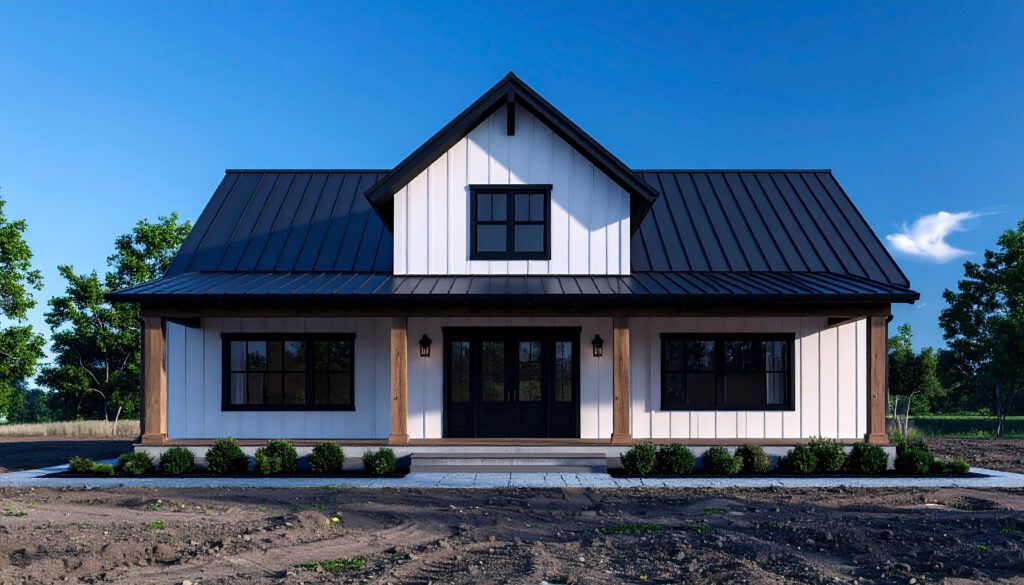
Canyon County has become one of Idaho’s most active regions for rural residential growth, including barndominiums and shop-house style homes. With its mix of agricultural land, rural residential zoning, and transitional development areas, the county offers real opportunity—but only when zoning, engineering, access, and health requirements are addressed early. Cascade Custom Construction works with clients throughout Canyon County, and the most successful barndominium projects follow a clear pattern: permitting and land feasibility come first, design comes second.
Canyon County does allow barndominiums in unincorporated areas when they meet zoning and residential building standards. However, approval is never automatic. Each parcel is reviewed for zoning compliance, site conditions, septic feasibility, access, and engineered structural integrity. This guide explains how Canyon County barndominium permitting works, where challenges typically arise, and how to move through the process with fewer delays and fewer surprises.
This guide applies only to unincorporated Canyon County. Parcels located within the city limits of Nampa, Caldwell, Middleton, Parma, Wilder, Greenleaf, or Melba are governed by city building departments and zoning ordinances, not Canyon County.
Where Canyon County Has Jurisdiction
Canyon County Development Services is responsible for permitting and inspections only for properties located outside incorporated city boundaries. For qualifying parcels, the county reviews projects for building code compliance, zoning district permissions, setback and lot standards, floodplain or overlay regulations, driveway and access placement, and coordination with health districts and utility providers.
From firsthand experience, one of the most common mistakes landowners make is assuming county jurisdiction applies simply because a property feels rural. Jurisdiction is determined by legal boundaries, not land use appearance.
Zoning Context for Barndominiums in Canyon County
How Canyon County Classifies Barndominiums
Canyon County classifies barndominiums as single-family dwellings, meaning they are generally allowed in zoning districts where single-family homes are permitted. Common zoning districts where barndominiums may be feasible include CR (Rural), RR (Rural Residential), A (Agricultural), A2 (Agricultural Two), and similar large-parcel rural designations.
Zoning determines whether a residence is allowed, but zoning alone does not guarantee approval. Other limitations often include subdivision CC&Rs that restrict exterior finishes or metal siding, architectural control provisions, floodplain or irrigation easements, parcels with unique access or slope constraints, and highway district rules governing driveway placement. For early evaluation, the barndominium zoning and land suitability checklist for Idaho is a useful reference.
A critical planning rule applies throughout Canyon County: zoning determines what you can build, while CC&Rs determine what you cannot build. Both must be verified before design begins.
Lot Size and Land Requirements
Lot size requirements vary by zoning district. In many rural areas of Canyon County, parcels are large enough to accommodate septic systems, wells, and barndominium footprints, but feasibility must be verified on a site-specific basis.
Key land suitability factors include soil characteristics for septic approval, slope and depth to restrictive layers, available space for both primary and replacement drain fields, driveway access standards enforced by the applicable highway district, proximity to irrigation canals or flood zones, and availability of power, gas, and fiber utilities.
Cascade Custom Construction performs feasibility reviews early in the process because land that looks ideal on paper may prove unbuildable once septic or access constraints are evaluated. Learn howpost-frame construction works in Idaho to ensure compliance with local requirements.
Structural Design Criteria in Canyon County
Canyon County enforces Idaho-adopted building codes with state amendments and site-specific design requirements. Structural design considerations typically include ground snow load, minimum roof snow load, basic wind speed based on terrain and exposure, seismic design category consistent with regional mapping, and required frost depth for foundations.
Every barndominium must be engineered to meet or exceed these criteria. Snow loads and wind exposure can vary across Canyon County depending on elevation and surrounding terrain, making local engineering essential. Cascade designs each barndominium to reflect actual site conditions rather than generic assumptions.
Post-Frame and Steel Building Requirements
Residential post-frame and steel barndominiums in Canyon County must be fully engineered. County requirements typically include complete structural engineering, engineered roof trusses, engineered lateral bracing and diaphragm systems, engineered foundation and slab details, and stamped plans prepared by an Idaho-licensed engineer.
Plan sets must match the intended construction method exactly. Kit buildings sourced from other states frequently require redesign or reinforcement to comply with Canyon County standards and Idaho code requirements. Cascade specializes in custom barndominiums built to meet local regulations.
Codes Enforced by Canyon County
Canyon County enforces Idaho-adopted versions of the International Residential Code, International Building Code, International Mechanical, Plumbing, Fire, and Energy Codes, along with applicable Idaho amendments and local county design standards.
All Cascade engineering and construction documents are prepared to meet or exceed these code requirements, minimizing plan review friction and inspection issues. Clients often reference the barndominium construction timeline for clarity on project stages.
The Canyon County Permitting Process
The permitting process begins with a zoning review. Planning and Zoning verifies allowed uses based on the zoning district, setback and lot coverage compliance, floodplain overlays, driveway access rules, and subdivision or parcel division compliance.
Once zoning is confirmed, building plans are submitted for review. County reviewers evaluate structural engineering, foundation design, energy code compliance, construction methods, and site plan accuracy.
If a septic system is required, Central District Health conducts a separate review focusing on soil suitability, slope and drainage, septic system design, replacement field location, and required separations from wells and water sources.
After all reviews are approved, Canyon County issues the building permit. Construction inspections typically include footing or foundation, slab, framing, electrical, plumbing, mechanical, and final occupancy inspection.
Permit Fees in Canyon County
Permit fees are calculated using a combination of project valuation, square-foot cost tables, plan review calculations, zoning and environmental review fees, health district septic review fees, and driveway or access permits issued by local highway districts.
Because total fees vary significantly by project size and complexity, Cascade pulls current fee estimates directly from official county schedules during project planning.
Septic, Wells, and Utilities
Septic Systems
Septic systems require approval from Central District Health. Approval depends on soil characteristics, depth to restrictive layers, lot configuration, required separation distances, and adequate space for a replacement drain field. Septic feasibility should always be verified before land purchase.
Wells
Well depth and drilling cost vary based on aquifer location and site conditions. Nearby well logs often provide the best indication of feasibility and expected cost.
Power, Gas, and Fiber
Utility installation costs depend on distance to existing infrastructure, trenching conditions, easements, terrain, and provider capacity. Utility feasibility is evaluated early to prevent budget surprises later in the project.
Common Canyon County Barndominium Red Flags
From firsthand experience, the most frequent challenges include parcels located inside city limits, CC&Rs restricting metal siding or shop-house designs, floodplain development limitations, irrigation or canal easements crossing buildable areas, steep slopes that prevent standard driveway access, soils unsuitable for septic systems, narrow parcels that cannot meet setback requirements, and highway district restrictions on driveway placement.
Identifying these issues early prevents costly redesigns and stalled permits. Working with experienced barndominium builders in Idaho mitigates many common risks.
How Cascade Custom Construction Works in Canyon County
Cascade Custom Construction ensures barndominium projects align with Canyon County expectations by providing full structural engineering, accurate site planning, septic and well feasibility review, utility coordination, compliance with county, state, and health department requirements, and transparent pricing based on local standards.
Our pre-purchase feasibility review helps clients avoid land purchases that appear affordable but are impractical to build on.
Frequently Asked Questions About Canyon County Barndominium Permits
Are barndominiums allowed in unincorporated Canyon County?
Yes. Barndominiums are allowed when zoning permits single-family dwellings and all residential building code requirements are met.
Do post-frame barndominiums require engineering?
Yes. All residential post-frame and steel structures must be fully engineered and stamped by an Idaho-licensed professional.
How long does the permitting process take in Canyon County?
Timelines vary, but complete and accurate submittals are reviewed far more quickly than incomplete applications.
Can I use a prefabricated metal building kit?
Only if it is engineered for residential use and designed to meet Canyon County snow, wind, seismic, and energy code requirements.
What is the most common mistake when planning a barndominium in Canyon County?
Purchasing land without confirming zoning, septic feasibility, access requirements, and CC&R restrictions.
Building a barndominium in unincorporated Canyon County is very achievable when approached with proper planning and accurate information. Zoning compliance, septic feasibility, structural engineering, and complete documentation determine whether a project moves smoothly or becomes delayed by preventable issues.
If you are considering a barndominium in Canyon County, Cascade Custom Construction can review your land, verify zoning and utility feasibility, provide accurate local pricing, and guide you through engineering, permitting, and construction with confidence. Early feasibility planning remains the most effective way to protect your investment and move forward with clarity.