

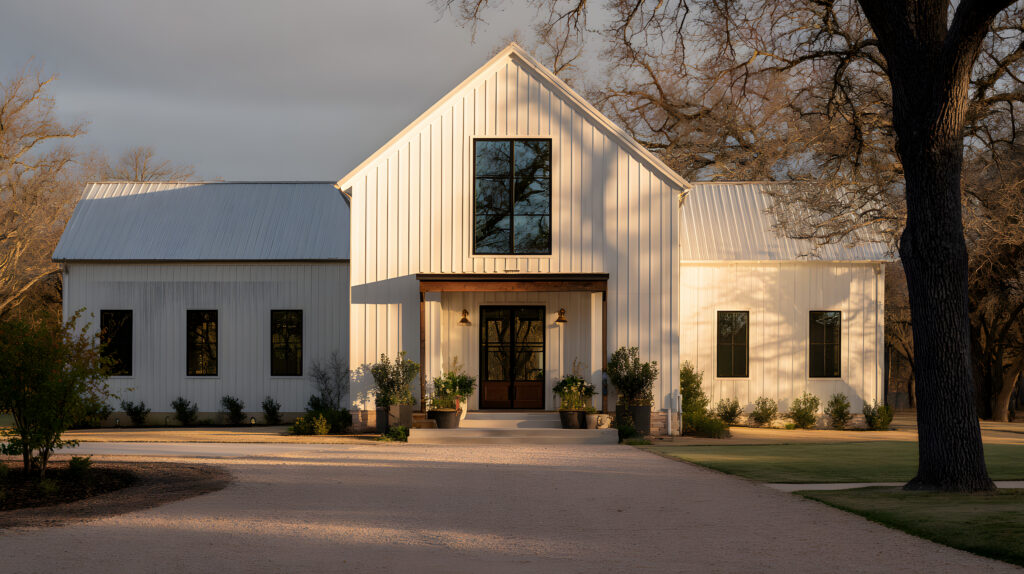
Building a barndominium in unincorporated Boise County offers unique opportunities due to large rural parcels, low-density zoning, and flexible land use. However, successful permitting requires careful coordination of zoning compliance, structural engineering, septic feasibility, and site access requirements.
This 2026 Boise County Barndominium Permitting Guide explains how permitting works outside city limits, what structural and zoning standards apply, and how to prepare for a smooth approval process.
If your parcel is located within incorporated city limits, permitting will fall under that city’s jurisdiction rather than Boise County.
Where Boise County Has Jurisdiction
Boise County Planning & Zoning oversees building permits in unincorporated areas of the county. This includes zoning review, land use compliance, structural plan review, and final permit issuance.
Before a building permit is approved, applicants must submit required documentation such as:
- Site plan with setbacks
- Engineered structural plans
- Septic and well documentation, where applicable
- Access and driveway details
Permits are issued only after zoning, structural, and health-related requirements are cleared.
Official resources and current application procedures are available through Boise County Planning & Zoning at boisecounty.us. Applicants should always verify current forms and fee schedules prior to submission, as updates may occur.
Zoning Context for Barndominiums in Boise County
In Boise County, a barndominium is treated as a residential structure when built in zoning districts that permit single-family dwellings. Rural and large-acreage zones are generally the most compatible for these types of builds.
Key zoning considerations include:
- Zoning district designation
- Private CC&Rs or subdivision restrictions
- Access compliance, particularly in Wildland-Urban Interface (WUI) areas
- Septic and well feasibility
- Overlay districts such as floodplain zones
Minimum residential setbacks in Boise County are typically:
- 20 feet front and rear
- 10 feet side setbacks
These standards are outlined in the Boise County Unified Land Ordinance.
Subdivision CC&Rs can be more restrictive than county zoning, particularly regarding exterior materials such as metal siding. These restrictions must be reviewed before design begins.
Lot Size and Land Feasibility Requirements
Parcel feasibility is one of the most critical early steps in barndominium permitting.
Important site factors include:
- Soil suitability for septic installation and designated replacement area
- Terrain slope and driveway access
- Utility extension distance (power, water, fiber)
- Easements and encumbrances
- Floodplain or WUI overlays
- Parcel size sufficient for both residence and detached shop if applicable
Boise County notes that accessory outbuildings without plumbing may have different requirements than residential structures. However, once living space or plumbing is introduced, full residential permitting applies.
Remote mountain lots often require additional engineering, snow-load evaluation, and utility planning, which can impact cost and timeline.
Structural Design Criteria in Boise County (2026 Standards)
Boise County enforces structural requirements based on adopted Idaho building codes and site-specific conditions.
Engineering is required for custom barndominiums, especially post-frame and steel structures.
Key structural criteria include:
- Frost depth: 36 inches minimum foundation depth
- Site-specific ground snow load requirements based on elevation and terrain
- Wind load requirements based on exposure category
- Lateral bracing and uplift design
- Engineered trusses and connection details
Because Boise County includes mountainous terrain with varying snow loads, structural engineering must reflect the exact parcel location rather than generalized regional assumptions.
Applicants should confirm the current adopted design criteria with Boise County Development Services prior to final engineering submission.
Post-Frame and Stick-frame Building Requirements
Barndominiums in Boise County are frequently constructed using post-frame or stick-frame building systems. These structures must be fully engineered and compliant with county structural requirements.
Plan sets must clearly show:
- Foundation design
- Structural framing
- Truss engineering
- Lateral load systems
- Site-specific snow and wind load calculations
Kit-style buildings without stamped engineering plans are at high risk of failing plan review. We do not recommend building with them. Boise County requires documentation demonstrating compliance with adopted codes and structural criteria in effect at the time of application.
Building Codes Adopted by Boise County
Boise County enforces building codes adopted through county ordinance, referencing the Idaho State Building Code Board’s adopted versions of:
- International Residential Code (IRC)
- International Building Code (IBC)
- Mechanical Code
- Plumbing Code
- Energy Code
All barndominiums must meet or exceed the codes in effect at the time of permit application.
Up-to-date code documents and application procedures are available through the Boise County Planning & Zoning website.
High-Level Boise County Permitting Process
Understanding the step-by-step process helps prevent delays.
Step 1: Zoning and Land-Use Review
A site plan and zoning application are submitted to Planning & Zoning. Review includes zoning compliance, setbacks, lot coverage, and overlay zones.
Step 2: Building Plan Submission
Applicants submit:
- Engineered structural plans
- Site plan with driveway and utility layout
- Septic and well approvals (if required)
- Construction details and specifications
Step 3: County Plan Review
Building and zoning departments review compliance with structural loads, building code requirements, and land-use regulations.
Step 4: Permit Issuance
Once all approvals are complete and fees are paid, the building permit is issued.
Step 5: Construction Inspections
Typical inspections include:
- Footing and foundation
- Slab
- Framing
- Mechanical, plumbing, electrical
- Final occupancy inspection
Inspection scheduling procedures are outlined in the county’s permit documentation guidelines and should be reviewed prior to construction.
Permit Fees in Boise County
Permit fees are based on project valuation, plan review complexity, zoning review, and any required health or utility permits.
Total fees vary by:
- Square footage
- Structural complexity
- Utility scope
- Septic system requirements
Specific totals are determined during application review. Applicants should consult the most current fee schedule prior to budgeting.
Septic, Wells, and Utility Requirements
Most rural Boise County parcels require septic permits from the regional health district before building permit issuance.
Additional considerations include:
- Well drilling requirements
- Power extension distances
- Utility trenching costs
- Remote access challenges
Mountain and forested lots may require extended utility infrastructure, increasing both cost and timeline.
Septic approval depends on soil type, slope, and available replacement area. There is no guaranteed approval based solely on acreage.
Common Boise County Permitting Red Flags
Several issues frequently delay or complicate barndominium approvals:
- Parcel located within incorporated city limits
- CC&Rs prohibiting metal or shop-style exteriors
- Lack of septic feasibility
- Steep terrain or limited ingress access
- Overlooked WUI or floodplain overlays
- Required driveway or road upgrades
Early feasibility review significantly reduces the risk of mid-process redesigns or permit denial.
How Cascade Custom Construction Navigates Boise County Permitting
Cascade Custom Construction provides structured support for Boise County barndominium projects by addressing feasibility and engineering early in the process.
Services include:
- Full structural engineering tailored to Boise County load criteria
- Early site and zoning review
- Septic and utility feasibility coordination
- Transparent rural build pricing
- Permit submission coordination
- Inspection and construction oversight
By aligning engineering, zoning, and documentation before submission, Cascade helps streamline approvals in complex rural environments.
Considering a Barndominium in Unincorporated Boise County?
Permitting in Boise County requires coordination between zoning, engineering, utilities, and health approvals. Early feasibility analysis significantly reduces risk, cost overruns, and delays.
Cascade Custom Construction can:
- Review your parcel’s zoning and overlays
- Provide a cost estimate aligned with Boise County conditions
- Coordinate engineering, permitting, and construction support
If you are planning a barndominium in unincorporated Boise County in 2026, schedule a Barndominium Feasibility Call with Cascade Custom Construction to evaluate your site and begin the permitting process with clarity.