

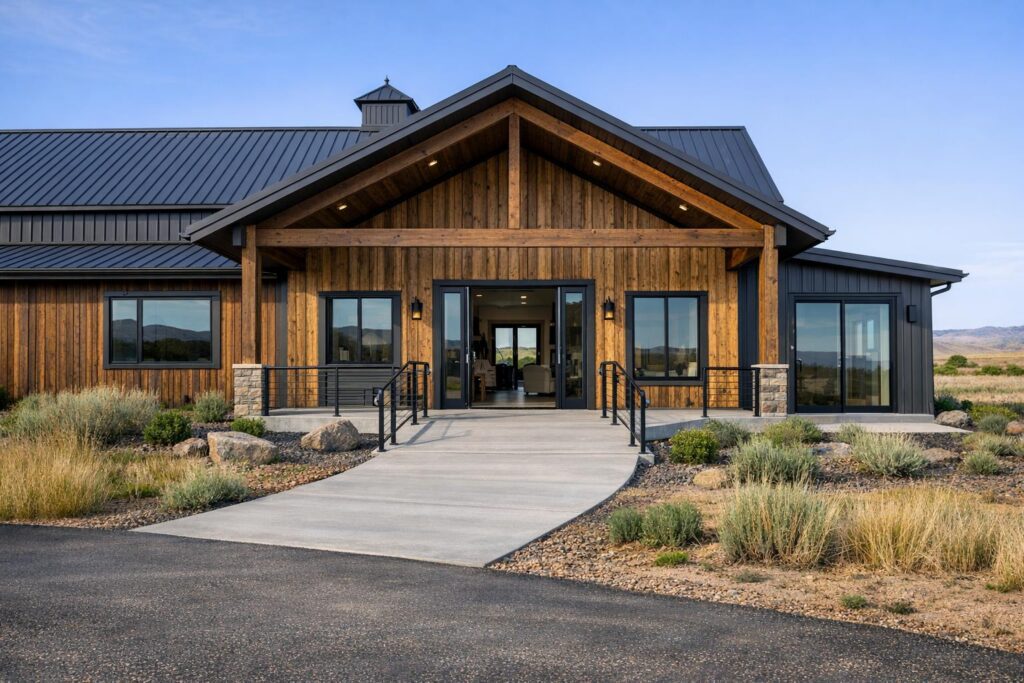
A smart Boise build for today’s lifestyle and tomorrow’s needs
“Aging in place” isn’t only for retirees. In Southern Idaho, more homeowners in their 20s and 30s are choosing to build homes that adapt over time—because life changes fast. A new injury, a growing family, a parent moving in, or just wanting a low-maintenance, comfortable layout can all make “forever-ready” design feel like the most practical upgrade you can add during construction.
For barndominiums (and barndominium-style homes) built with a wood-framed approach, aging-in-place planning is less about turning your home into a hospital—and more about making sure the layout, entries, bathrooms, lighting, and future options are thoughtfully built in from day one.
What “aging in place” means for an Idaho barndominium
Aging in place simply means your home can support you through more seasons of life—without major remodels. It’s closely tied to universal design, which focuses on comfort and usability for people of different ages and abilities, while still looking like a modern custom home.
In practice, this usually comes down to: step-minimized access, simple circulation (less tight turning and awkward hallways), bathroom readiness, and one-level living options.
1) Start with a “main-level living” blueprint
Even if you love the idea of a loft, keep the essentials on the main level:
- Primary bedroom on the main floor
- A full bathroom on the main floor
- Laundry on the main floor (or at least designed for future relocation)
- A “flex” room that can become an office, nursery, or caregiver space
2) Prioritize no-step (or low-step) entry planning
Universal design commonly emphasizes a no-step path and entry where feasible, plus manageable thresholds. This helps with strollers, groceries, knee injuries, and future mobility changes.
In Idaho, grading, snowmelt, and drainage matter. The best approach is to design the entry and site plan together—so accessibility doesn’t create water problems later.
Aging-in-place features that feel “invisible” (but pay off later)
Doorways & hallways that don’t pinch
- Wider interior doors in key areas (primary suite, laundry, main bath)
- Lever-style handles instead of knobs
- Clear, straight paths between kitchen, bedroom, and bath
Bathroom “future-proofing”
- Reinforced backing (blocking) for future grab bars
- A curbless or low-threshold shower option
- Comfort-height toilet rough-in planning and good lighting
Kitchen usability upgrades
- Aisles that allow easy two-person flow
- Pull-out storage where it matters most
- Task lighting and fewer “shadow corners”
Builder tip: Many aging-in-place upgrades are easiest (and cleanest) during framing—especially bathroom blocking, doorway planning, and shower layouts. Retrofitting later can mean tile tear-out, drywall repairs, or re-routing plumbing.
Quick “Did you know?” facts for Idaho homeowners
- Universal design isn’t the same as ADA. ADA rules typically apply to public spaces; universal design is a homeowner-focused approach for comfort and adaptability.
- A no-step entry helps more than mobility. Think snow boots, coolers, muddy kids, moving furniture, and recovering from an ankle injury.
- Energy code matters in Idaho. Idaho’s statewide energy code is based on the 2018 IECC with Idaho amendments, which affects insulation, windows, and mechanical planning—important for comfort as you age in place.
Aging-in-place feature checklist (design vs. later retrofit)
| Feature | Best time to add it | Why it matters | Notes for barndominium-style homes |
|---|---|---|---|
| Main-level primary suite | Design phase | Reduces stair dependence | Lofts are great—just don’t hide the essentials upstairs |
| Blocking for grab bars | Framing | Fast, clean future installs | Low effort now, high value later |
| Low/zero-threshold shower | Plumbing + tile planning | Safer bathing, easier access | Requires thoughtful slope and waterproofing details |
| No-step/low-step entry path | Site + foundation coordination | Easier everyday access | Must work with Boise-area drainage and snowmelt realities |
| Brighter, layered lighting | Electrical plan | Reduces falls; improves comfort | Great fit for open-concept barndo layouts |
Boise & Southern Idaho angle: plan for climate, permits, and property use
Building an aging-in-place barndominium in the Boise area isn’t only about the interior layout. It’s also about how your home handles Southern Idaho’s real-world conditions—temperature swings, winter traction, spring runoff, and long-term durability.
Accessory buildings & shops: think “future mobility” too
A shop, RV bay, or hobby space can become an aging-in-place asset if you plan smoother transitions, good lighting, and easy-to-use door hardware. Boise’s permitting and zoning rules can also change depending on size/height and property conditions, so it’s worth confirming early in design.
Energy efficiency is comfort (not just savings)
Drafts, temperature stratification, and cold floors get more noticeable over time. Aligning insulation, air sealing, window selection, and HVAC design with Idaho’s energy code helps create a home that stays comfortable with less effort year-round.
If you’re planning a wood-framed barndominium-style home (not steel-frame), you can still achieve wide open spans and great flow—while keeping future adaptability in mind from the first sketch.
Ready to plan a Boise-area barndominium that works for decades?
Cascade Custom Construction helps Southern Idaho homeowners design and build personalized, high-quality structures with practical details that hold up over time. If you want an aging-in-place layout that still feels like a premium custom home, a short planning conversation can bring clarity fast.
FAQ: Aging in place barndominiums in Idaho
Do aging-in-place features make a home look clinical?
Not if they’re planned well. Wider paths, better lighting, smart bathroom layouts, and no-step entries can look completely “normal”—they just feel better to live in.
What’s the single best aging-in-place upgrade to add during construction?
Bathroom blocking for future grab bars is one of the easiest “do it now” items. It’s minimal effort during framing and can save major hassle later.
Is a barndominium a good fit for multi-generational living?
It can be a great fit when the plan includes privacy zones, a main-level bedroom and full bath, and thoughtful sound separation. Many owners also like pairing the home with a shop or hobby space that keeps daily life organized.
Do I need ADA compliance for a private home in Boise?
Most private single-family homes aren’t required to follow ADA the way public buildings are, but universal design concepts can still guide your plan for better comfort and future flexibility.
Can I add aging-in-place features later if I skip them now?
Some items retrofit easily (lever handles, lighting upgrades). Others are far easier during the build (no-step entry coordination, curbless shower detailing, structural backing in walls). If aging in place is a priority, it’s worth planning early.