

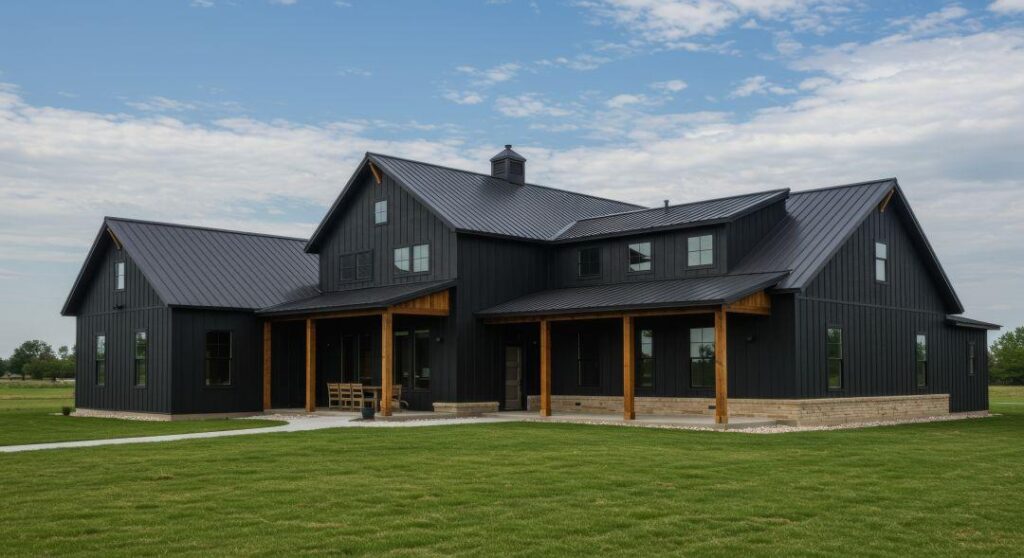
Building Your Dream on Solid Ground
The dream of a custom barndominium in Idaho often starts with visions of spacious, open-concept living against a backdrop of stunning landscapes. But before the walls go up and the interior design begins, the single most critical decision is made: the foundation. A properly engineered and installed foundation is the literal bedrock of your home, ensuring its stability, longevity, and safety for decades. In a state with diverse terrain and a four-season climate like Idaho, choosing the right foundation isn’t just a construction step—it’s a long-term investment in your property’s integrity.
This guide explores the essential factors for selecting the perfect barndominium foundation in Idaho, from understanding different foundation types to accounting for local soil and climate conditions. With the right knowledge, you can ensure your new home is built to last from the ground up.
Key Foundation Types for Idaho Barndominiums
The structure of a barndominium, often featuring a metal frame and large open spans, requires a foundation that can evenly distribute its weight. Here are the most common and effective options for Idaho builds.
1. Monolithic Slab Foundation
A monolithic slab is a single, thick layer of concrete poured all at once to create both the footing and the floor. The edges are thickened to provide extra support for the exterior walls. This type is popular for its simplicity and the speed at which it can be installed.
- Best For: Level lots and situations where speed is a priority. It’s a straightforward solution for workshops, garages, and smaller barndominiums.
- Considerations: Plumbing and electrical conduits must be precisely placed before the pour, as they will be embedded in the concrete. Future access for repairs can be more challenging.
2. Stem Wall Slab Foundation
A stem wall foundation involves pouring concrete footers first, followed by short “stem walls” built on top of the footers. The slab for the floor is then poured inside the perimeter of the stem walls. This multi-step process allows the footers to be placed below the frost line, providing superior stability in Idaho’s cold winters.
- Best For: Areas with significant ground freeze, like many parts of Treasure Valley and the Magic Valley. It is also excellent for sloped lots, as the stem walls can be adjusted in height to create a level base.
- Considerations: This type is more labor-intensive than a monolithic slab but offers greater protection against frost heave and foundation cracking.
3. Crawl Space Foundation
A crawl space elevates the home off the ground, creating an accessible but unlivable space between the floor and the earth. It is constructed with footings and exterior walls similar to a basement but much shorter. This design is highly practical for accessing plumbing, wiring, and HVAC systems.
- Best For: Sloped terrain and homeowners who want easy access to utilities. It also helps protect against moisture and pests when properly sealed and ventilated.
- Considerations: A crawl space must be properly insulated and encapsulated to prevent moisture issues, which can lead to mold and energy loss.
4. Full Basement Foundation
A full basement provides a deep foundation that can double as additional living space, storage, or a storm shelter. The process involves significant excavation to create a full-height living area below ground level. For barndominiums, a basement offers incredible versatility and substantially increases the usable square footage of the home.
- Best For: Homeowners looking to maximize space on their property. Basements are naturally insulated by the surrounding earth, making them energy-efficient spaces.
- Considerations: This is the most complex foundation type, requiring extensive excavation and careful waterproofing to prevent leaks. Not all soil types are suitable for a full basement.
Choosing the Right Foundation: A Quick Comparison
| Feature | Monolithic Slab | Stem Wall | Crawl Space | Full Basement |
|---|---|---|---|---|
| Frost Protection | Good (with insulation) | Excellent | Excellent | Excellent |
| Utility Access | Limited | Limited | Excellent | Excellent |
| Suitability for Slopes | Poor | Good | Excellent | Good (with engineering) |
| Adds Usable Space | No | No | No (storage only) | Yes |
Critical Factors for Your Idaho Foundation
Beyond the foundation type, several local factors heavily influence the final design. Working with an experienced builder like Cascade Custom Construction ensures these variables are expertly handled.
Idaho’s Climate and Frost Line
The “frost line” is the depth to which the ground freezes in winter. In Idaho, this can range from 24 to 36 inches or more, depending on elevation and location. Footings must be placed below this line to prevent “frost heave,” a phenomenon where frozen soil expands and pushes the foundation upward, causing severe structural damage. A stem wall or basement foundation is often the best choice to mitigate this risk.
Local Soil Conditions
Southern Idaho’s geology is incredibly varied. The soil on your property could be expansive clay, well-draining sand, or rocky terrain. A soil test is a crucial first step. Expansive soils that swell with moisture may require specialized engineering, while rocky ground increases excavation difficulty. Your foundation must be designed to match the load-bearing capacity of your specific soil type.
Site Topography and Water Drainage
A perfectly flat lot is rare. The slope of your land will impact foundation design and site preparation. Proper grading is essential to ensure water drains away from your foundation, preventing leaks, erosion, and hydrostatic pressure against basement walls. A skilled builder will develop a comprehensive drainage plan that includes gutters, downspouts, and potentially French drains. This is especially important for properties from the rolling hills near Boise to the riverbanks near Twin Falls.
Did You Know?
Concrete doesn’t “dry”—it cures. This chemical process, called hydration, is what gives concrete its incredible strength. Proper curing, which involves maintaining adequate moisture and temperature, can continue for months or even years after pouring, constantly strengthening your foundation over time.
Ready to Build on a Foundation of Excellence?
Choosing the right foundation is a complex but crucial part of your building journey. At Cascade Custom Construction, we bring deep expertise in Idaho’s unique building conditions to every project. Whether you’re building a sleek custom shop or a sprawling family barndominium, we ensure your structure is built on a foundation of integrity and quality.
Frequently Asked Questions
What is the best type of foundation for a barndominium in Idaho?
There is no single “best” type; it depends on your specific location, soil, and budget. However, due to Idaho’s cold winters and frost line, a stem wall or full basement foundation is often recommended for residential barndominiums to ensure long-term stability.
How deep does my foundation’s footings need to be?
Foundation footings must always be placed below the local frost line. In Southern Idaho, this typically means a depth of at least 24-36 inches. A professional builder will confirm the exact requirements for your specific site based on local building codes and soil conditions.
Can my barndominium have a basement?
Absolutely! A full basement is an excellent way to add valuable living or storage space to your barndominium. It requires careful planning, excavation, and waterproofing, but the benefits are significant. Consult with your builder to see if your property is suitable for a basement.
Do I need a soil report before starting construction?
Yes, a geotechnical (soil) report is highly recommended and often required by local building departments. This report provides essential information about your soil’s composition, stability, and moisture content, allowing engineers to design a foundation that is perfectly suited for your property. For more general questions, check out our FAQs page.
Glossary of Terms
- Curing: The chemical process where concrete hardens and gains strength by forming bonds between its components. This requires adequate moisture and temperature control.
- Footing: The widened base of a foundation wall or column that distributes the structure’s weight over a larger area of soil.
- Frost Heave: The upward swelling of soil during freezing conditions caused by an increasing presence of ice. It can exert enough force to lift and crack foundations.
- Frost Line: The maximum depth at which the ground freezes during the winter. Footings must be placed below this depth.
- Monolithic Slab: A single pour of concrete that serves as both the foundation and the floor of the structure.
- Rebar: Steel reinforcing bars used to add tensile strength to concrete, helping it resist cracking and breaking under tension.
- Stem Wall: Short concrete walls built on top of the footings that support the main structure and create a level base for the floor slab or crawl space.